Instead of a classic progress bar, I used environmental storytelling to express growth.
As players keep creating, the studio slowly fills with new details — tools, notes, and memories appear naturally.
This subtle change transforms progress into a feeling of presence rather than a number.
The world itself becomes the progress bar — soft, slow, and alive.
Reflection
progress isn’t linear — it’s emotional.
The challenge wasn’t about mechanics, but how to translate a feeling of making into interaction.
Each design choice — from removing progress bars to letting NPCs love “flawed” pieces — is a small act of rebellion against perfectionism.
In the end, this project taught me that play can be a form of empathy — a way to help people see beauty in what’s already enough.

Orenji’s Clayhouse
A cozy mobile game where clay meets code — designed to turn tactile joy into a playful digital experience.
Description
Orenji’s Clayhouse is a self-initiated passion project where I build a cozy mobile game and brand IP from scratch — combining the warmth of handmade clay with digital play.
It’s a world where players shape, fire, and glaze imperfect ceramics, guided by Orenji — a curious orange cat who celebrates mistakes and small joys.
The project explores how tactile craft, narrative, and interactivity can come together to build emotional engagement — both as a game experience and as a brand identity.
Duration
March 2025 - Ongoing
Role
UX/UI Designer, Video Editor, Product Designer, Ceramic Artist, game design, UI, branding, prototyping
Tools Used
Figma, Capcut, Procreate, Godot, Squarespace
The Challenge
In most creative games, “success” means perfection.
But in real craft, imperfection is what makes each creation unique.
I wanted to create a digital experience that brings back the feeling of slow making — the mess, the tactile joy, and the quiet pride of creating something that’s “not perfect, but mine.”
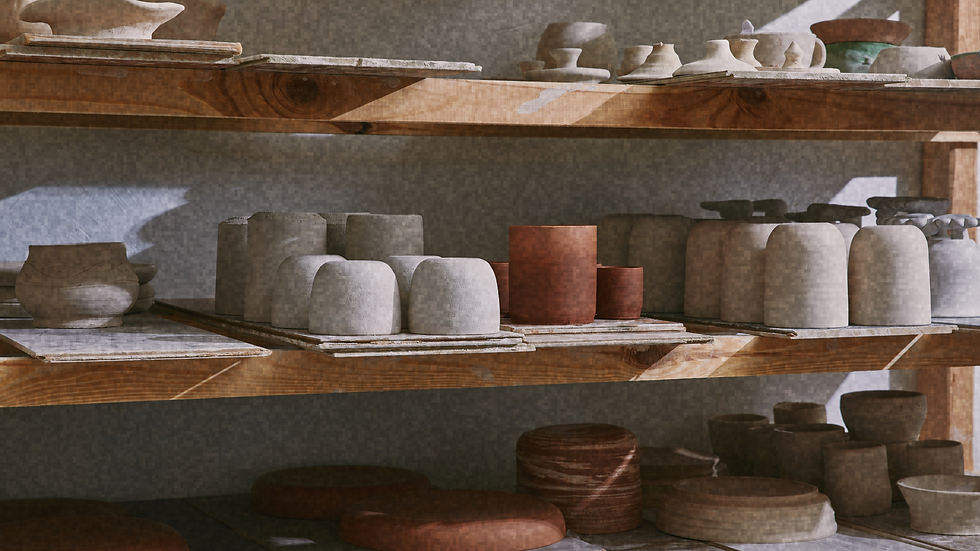

How might we design a digital space that feels handcrafted, encouraging playfulness, emotional connection, and curiosity — instead of productivity or competition?

Approach
I reimagined the clay process as three mini-games, tied together by quirky NPCs.
-
Shaping → Figma prototype: drag, squish, curve-match
-
Firing → Kiln heat control, cracks as outcomes
-
Glazing → Free-flow painting, bold colors rewarded
-
NPCs → Each has unique tastes: perfectionist, chaos, cracked-pot lover
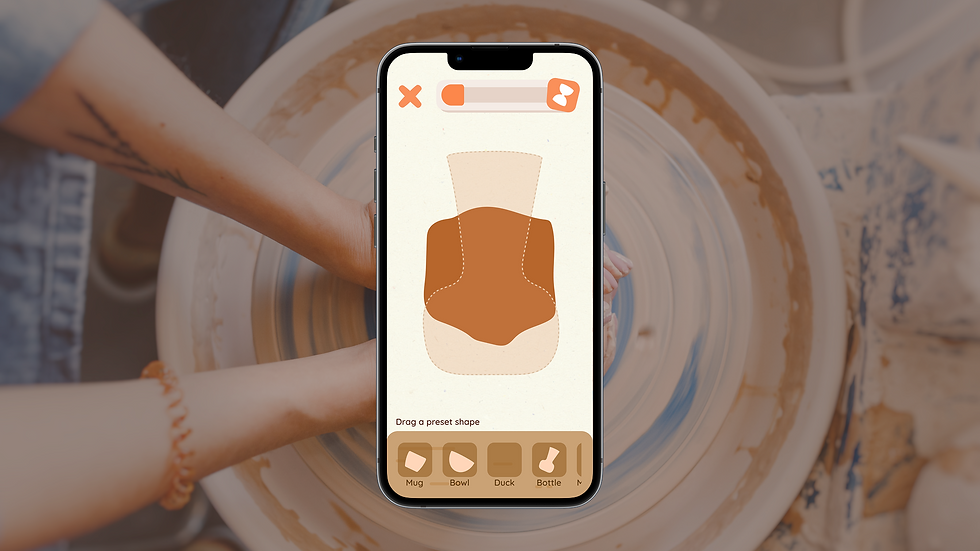
Shape
Players mold clay to match the preset silhouette — each wobble becomes part of its charm.

Bisque Fire
A timing mini-game where heat control decides the cracks; risk brings personality.

Glaze
Players mix colors and spray to coat — every gesture changes the mood of the piece.

NPC System — Hidden Stories Through Play
Each NPC has a unique taste in pottery. Their messages arrive in Orenji’s inbox as “orders,” creating a gentle gameplay loop of order → make → reflect.
There’s no single right outcome — every imperfection is someone’s favorite. It’s all about preference, not perfection.


Screen Design
The Home Page connects orders, inbox messages, and achievements in one cozy hub, while the Studio Page anchors the emotional heart of the game — a safe space for making and trying again.


Branding
Orenji’s Clayhouse is not just a game — it’s a brand built around tactile warmth, cozy imperfection, and quiet joy.


New
Arrival
See my other projects...


